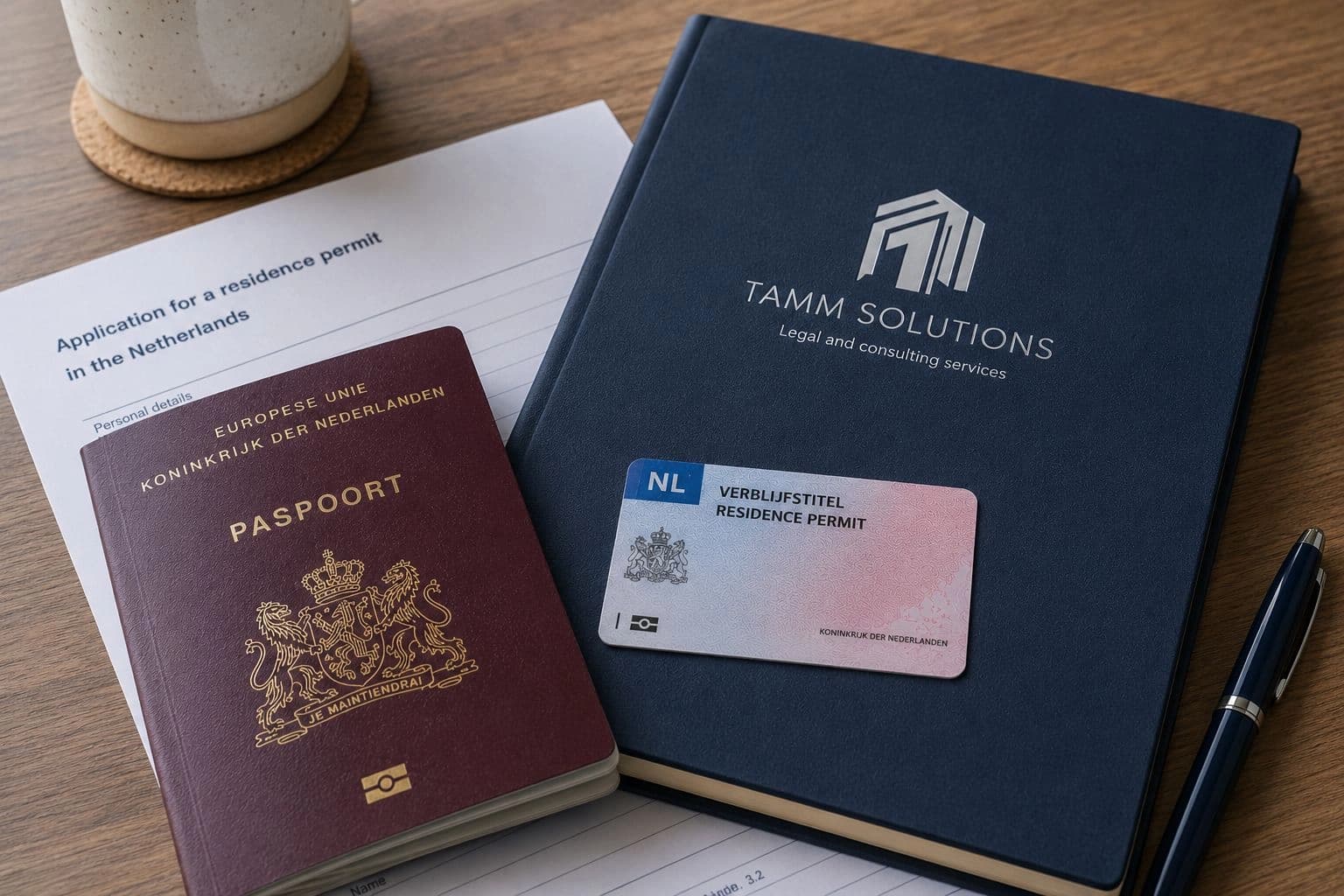
Residence Permit for Economically Inactive Long-Term EU Residents in the Netherlands
Many non-EU nationals who obtain EU long-term resident status assume that this automatically gives them the right to move to another EU country. In practice, this is not the case.
Residence Permit for Economically Inactive Long-Term EU Residents in the Netherlands
EU long-term resident status may make relocation within the European Union easier, but each EU member state still applies its own residence procedure and conditions. This means that a non-EU national who holds EU long-term resident status in another EU member state must still apply for the appropriate Dutch residence permit before settling in the Netherlands.
One possible route under Dutch immigration rules is residence as an economically inactive long-term EU resident. This route may be relevant for individuals who already hold EU long-term resident status issued by another EU member state and who wish to live in the Netherlands without relying on employment or entrepreneurship as the main reason for residence.
What Does “Economically Inactive” Mean?
An economically inactive person is generally someone who is not moving to the Netherlands primarily to work as an employee or to operate a business.
Instead, the person must be able to support themselves through other financial means, such as:
* pension income
* savings
* investment income
* rental income
* income from assets
* financial support from family members
* other stable and verifiable financial resources
The key point is financial independence. The applicant must be able to support themselves without becoming dependent on Dutch public funds.
What Is EU Long-Term Resident Status?
EU long-term resident status is a residence status available to eligible non-EU nationals who have legally resided in an EU member state for an extended period, usually at least five years.
This status gives stronger residence rights in the EU country that issued it. It may also facilitate relocation to another participating EU member state, including the Netherlands.
However, it does not create an automatic right to live in the Netherlands. The applicant must still meet Dutch immigration requirements and obtain a Dutch residence permit.
Who May Qualify?
According to the Dutch Immigration and Naturalisation Service, applicants for this residence route generally need to show that they:
* meet the general residence requirements
* hold a residence permit for long-term EU residents in another EU country
* meet the Dutch income requirements
Applicants should always check the current IND application form and instructions before submitting an application, as the required documents may depend on their personal situation.
MVV Requirement
Long-term EU residents from another EU member state generally do not need a provisional residence permit (MVV) before coming to the Netherlands.
Applicants may enter the Netherlands and submit or complete the residence permit process in accordance with the applicable IND procedure. As immigration requirements may change over time, applicants should always verify the current IND requirements before filing an application.
Financial Requirements
The financial requirement is one of the most important aspects of this residence route.
The IND generally requires income to be independent, sustainable and sufficient. In practical terms, this means the applicant must show that their financial resources are legally obtained, available for a sufficient period and high enough to meet the applicable Dutch income threshold.
Depending on the applicant’s situation, relevant supporting documents may include:
* recent bank statements
* pension statements
* investment portfolio statements
* dividend statements
* rental income agreements
* proof of ownership of assets
* family support declarations, where relevant
* evidence that the income or resources are available for continued use
Applicants should not only show that they currently have money available. They should also be able to demonstrate that their financial position is stable and credible.
Healthcare and Insurance
Healthcare coverage is another important point to assess before relocation.
Depending on the applicant’s circumstances, appropriate health insurance may be required. Applicants should understand their healthcare obligations before moving, as registration, insurance and access to healthcare are often closely connected in practice.
Working Rights
Although this residence route is called “economically inactive,” holders of this permit are free to work in the Netherlands.
According to the IND, no separate work permit is required. The residence document states that work is freely permitted and that a TWV is not required.
This distinction is important. The application route is based on the applicant not relying on employment or entrepreneurship as the main reason for residence, but the permit itself may still allow work after it has been granted.
Validity of the Residence Permit
The residence permit for economically inactive long-term EU residents is valid for five years.
It is a temporary regular residence permit and may be extended if the applicable requirements continue to be met. Depending on the circumstances, the holder may also become eligible for permanent residence in the future.
Practical Steps After Arrival
After approval and arrival in the Netherlands, several practical steps usually follow.
Municipal Registration
Individuals who live in the Netherlands generally need to register with the local municipality.
BSN
Municipal registration usually results in the issuance of a Citizen Service Number (BSN). A BSN is required for many interactions with Dutch authorities, banks, insurers and service providers.
Health Insurance
Depending on the applicant’s situation, Dutch health insurance obligations may apply shortly after arrival.
Housing and Financial Administration
Finding suitable housing, arranging banking, reviewing insurance obligations and setting up personal administration are usually among the first practical relocation steps.
Common Mistakes Applicants Make
Assuming EU Long-Term Residence Gives Automatic Dutch Residence Rights
This is one of the most common misunderstandings. EU long-term resident status may support mobility, but a Dutch residence permit is still required.
Providing Only a Bank Balance
A bank balance alone may not always be sufficient. The applicant should be able to show that their resources are stable, credible and available for continued support.
Submitting Incomplete Documentation
Documents from different countries may need to be translated, legalised or otherwise prepared. This can take time and should be planned in advance.
Misunderstanding How the File Should Be Presented
Even when an applicant appears to meet the basic conditions, the application file should clearly explain the applicant’s residence status, source of funds, family situation and intended relocation to the Netherlands. A poorly structured file may lead to additional questions, delays or requests for further documents.
Frequently Asked Questions
Can I work in the Netherlands under this residence category?
Yes. According to the IND, holders of this residence permit are free to work in the Netherlands and no separate work permit is required.
Can retirees apply?
In many cases, yes. Retirees with sufficient pension income or other financial resources may find this route relevant.
Do I need to start a business?
No. This route is not based on entrepreneurship. It is intended for individuals who are financially independent and are not applying on the basis of employment or business activity.
Is pension income acceptable?
Pension income may be considered as part of the applicant’s financial resources, provided it meets the applicable requirements.
Are savings enough?
Savings may be relevant, but applicants should be prepared to show that the funds are sufficient, accessible and available for continued support.
Can rental income be used?
Rental income may be relevant if it can be properly documented, for example through ownership documents, lease agreements and bank statements showing receipt of rent.
Can family members join me?
Family members may have separate residence options depending on the circumstances and applicable immigration rules.
Do I need to speak Dutch?
Knowledge of Dutch is not always required for this residence route. However, learning Dutch can help with long-term integration and daily life in the Netherlands.
How TAMM Solutions Can Assist
TAMM Solutions supports financially independent long-term EU residents by assessing eligibility, preparing the application file and coordinating the key administrative steps connected with relocation to the Netherlands.
Our support may include:
* assessing whether this residence route is suitable for the applicant’s circumstances
* reviewing the applicant’s EU long-term resident status
* preparing a tailored document checklist
* reviewing financial resources and supporting evidence
* preparing and coordinating the residence application
* adding eligible family members to the application where applicable
* monitoring the application timeline during the statutory 90-day decision period
* guiding the applicant through post-approval steps, including municipal registration, BSN, health insurance and practical administration in the Netherlands
TAMM Solutions provides a practical and coordinated approach, helping applicants prepare a clear application file and manage the key administrative steps connected with relocation to the Netherlands.
Conclusion
The residence permit for economically inactive long-term EU residents may offer a practical route for financially independent individuals who already hold EU long-term resident status in another EU member state and wish to relocate to the Netherlands.
The main advantage of this route is that it may allow qualifying individuals to settle in the Netherlands without applying on the basis of employment or entrepreneurship. However, applicants must still meet Dutch immigration requirements, demonstrate sufficient financial resources and prepare their documentation carefully.
For retirees, investors and other financially independent residents, early preparation can make the relocation process significantly smoother.
If you are an EU long-term resident considering relocation to the Netherlands, TAMM Solutions can assess your situation and guide you through the required application and settlement steps.
Disclaimer
This article is for general informational purposes only and does not constitute legal, tax, immigration or financial advice. The applicable requirements may depend on individual circumstances and should be checked before submitting an application.