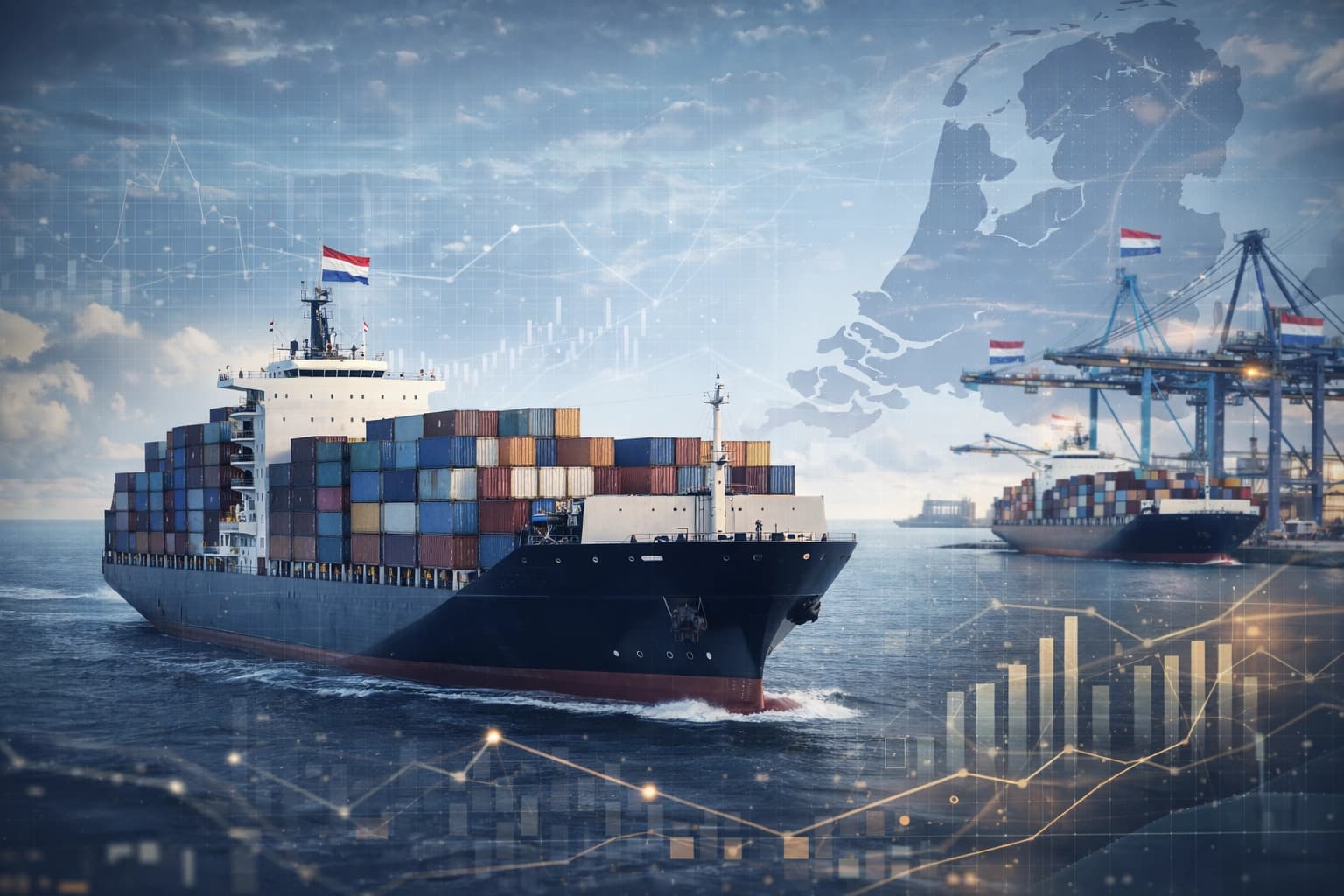
The Dutch Tonnage Tax Regime Explained A Tax-Efficient Solution for Shipping Companies
Learn how the Dutch tonnage tax regime offers qualifying shipping companies a predictable and tax-efficient alternative to standard corporate income tax in the Netherlands.
The Dutch Tonnage Tax Regime Explained A Tax-Efficient Solution for Shipping Companies
Learn how the Dutch tonnage tax regime offers qualifying shipping companies a predictable and tax-efficient alternative to standard corporate income tax in the Netherlands.
Introduction
For international shipping companies, taxation is not only a question of headline rates but of predictability, compliance, and long-term sustainability. Volatile freight markets, fluctuating fuel costs, and cyclical demand can make traditional profit-based taxation both unpredictable and burdensome.
To address this, many maritime jurisdictions offer alternative tax regimes tailored specifically to shipping activities. One of the most established and competitive of these is the Dutch tonnage tax regime, which allows qualifying shipping companies to calculate corporate income tax based on vessel tonnage rather than actual profits.
At TAMM Solutions, we regularly advise international shipping groups on whether the Dutch tonnage tax regime is suitable for their operations and how it can be implemented correctly within the Netherlands.
What Is the Dutch Tonnage Tax Regime?
The Dutch tonnage tax regime is an optional corporate income tax system available to qualifying shipping companies. Instead of taxing actual profits, taxable income is calculated using a fixed notional profit based on the net tonnage of qualifying vessels. This results in:
A very low effective tax burden
High predictability regardless of market performance
Reduced exposure to profit volatility
The regime is fully aligned with EU state aid rules and has long been recognized as a legitimate instrument to support maritime activities within Europe.
Why the Netherlands Offers a Tonnage Tax Regime
Shipping is a globally mobile industry. To remain competitive and retain maritime expertise, many EU countries have introduced tonnage tax regimes. The Netherlands has done so with a strong emphasis on:
Legal certainty
EU compliance
Substance and operational presence
As a result, the Dutch tonnage tax regime is widely used by international shipping companies operating in European and global markets.
Which Companies Can Qualify?
The tonnage tax regime is not available to all logistics or transport companies. It is strictly limited to companies engaged in qualifying shipping activities.
In general, eligible companies include:
Ship owners
Ship operators
Charterers (under certain conditions)
Maritime groups managing vessels
The company must carry out genuine shipping activities and meet Dutch substance and operational requirements.
Warehousing providers, freight forwarders, road transport companies, and general logistics operators do not qualify unless they also operate qualifying vessels.
Which Vessels Qualify?
Not all vessels automatically fall within the scope of the tonnage tax regime. Qualifying vessels generally include:
Seagoing ships used for commercial transport of goods or passengers
Certain offshore support vessels
Dredging and towing vessels (subject to conditions)
Pleasure craft, inland shipping vessels, and vessels used primarily for non-commercial purposes are typically excluded. Correct vessel classification is essential, as incorrect inclusion can result in denial of the regime or retroactive tax adjustments.
How Taxable Income Is Calculated
Under the tonnage tax regime, taxable income is calculated using:
The net tonnage of each qualifying vessel
Fixed daily profit amounts per tonnage bracket
These notional profits are aggregated and taxed at standard Dutch corporate income tax rates. Because the calculated taxable base is very low, the effective tax burden is significantly reduced compared to profit-based taxation.
Importantly, this calculation applies regardless of the company’s actual commercial profit or loss.
Election and Duration of the Regime
The tonnage tax regime is optional and must be formally elected. Once chosen, it applies for a fixed period of ten years.
This long commitment ensures stability but also means:
Entry must be carefully assessed
Exit options are limited during the election period
A thorough feasibility analysis before opting in is therefore essential.
Substance and Compliance Requirements
Access to the tonnage tax regime comes with strict compliance expectations. Shipping companies must demonstrate:
Sufficient operational substance in the Netherlands
Proper management and control of shipping activities
Accurate administration and documentation
The regime operates under supervision of the Dutch Tax and Customs Administration, which increasingly focuses on substance, governance, and consistency.
Failure to meet these requirements can jeopardize access to the regime.
Common Misconceptions and Risks
Shipping groups often encounter issues when:
Confusing logistics activities with qualifying shipping
Incorrectly classifying vessels
Underestimating Dutch substance requirements
Electing the regime without long-term planning
Because the regime is highly regulated, aggressive or incorrect interpretations can lead to audits, adjustments, and reputational risk.
Why Professional Structuring Matters
The Dutch tonnage tax regime is powerful—but only when applied correctly. It must be aligned with:
Corporate structuring
Group profit allocation
VAT and customs positions
Ongoing legal and financial administration
This is where integrated legal and tax advisory becomes critical.
As a boutique Dutch legal and corporate consulting firm, TAMM Solutions supports shipping companies with:
Feasibility assessments for tonnage tax
Dutch entity setup and structuring
Substance and governance implementation
Ongoing tax compliance and administration
Long-term advisory support
Frequently Asked Questions
Is the tonnage tax regime available to logistics companies? No, unless they operate qualifying seagoing vessels as part of their activities.
Does the regime eliminate corporate income tax? No. It replaces profit-based taxation with a tonnage-based calculation, resulting in a much lower effective tax burden.
Is the regime EU-compliant? Yes. It operates within EU state aid rules.
Can foreign shipping companies apply? Yes, provided they establish the appropriate structure and meet Dutch requirements.
Is the election reversible? The election applies for ten years and cannot easily be reversed during that period.
Conclusion & Next Steps
The Dutch tonnage tax regime offers qualifying shipping companies a predictable, compliant, and tax-efficient alternative to traditional corporate taxation. However, its benefits come with strict eligibility, substance, and compliance requirements.
For shipping companies considering the Netherlands as a maritime base, careful assessment and professional implementation are essential.
Discuss Your Shipping Structure with Confidence
If you are evaluating whether the Dutch tonnage tax regime is suitable for your shipping operations, a structured consultation can clarify eligibility, risks, and long-term implications.
Book an appointment with TAMM Solutions to discuss your maritime tax and corporate structuring options.